
Education
The Koebner Phenomenon — Why We Ask You to See Your Dermatologist First
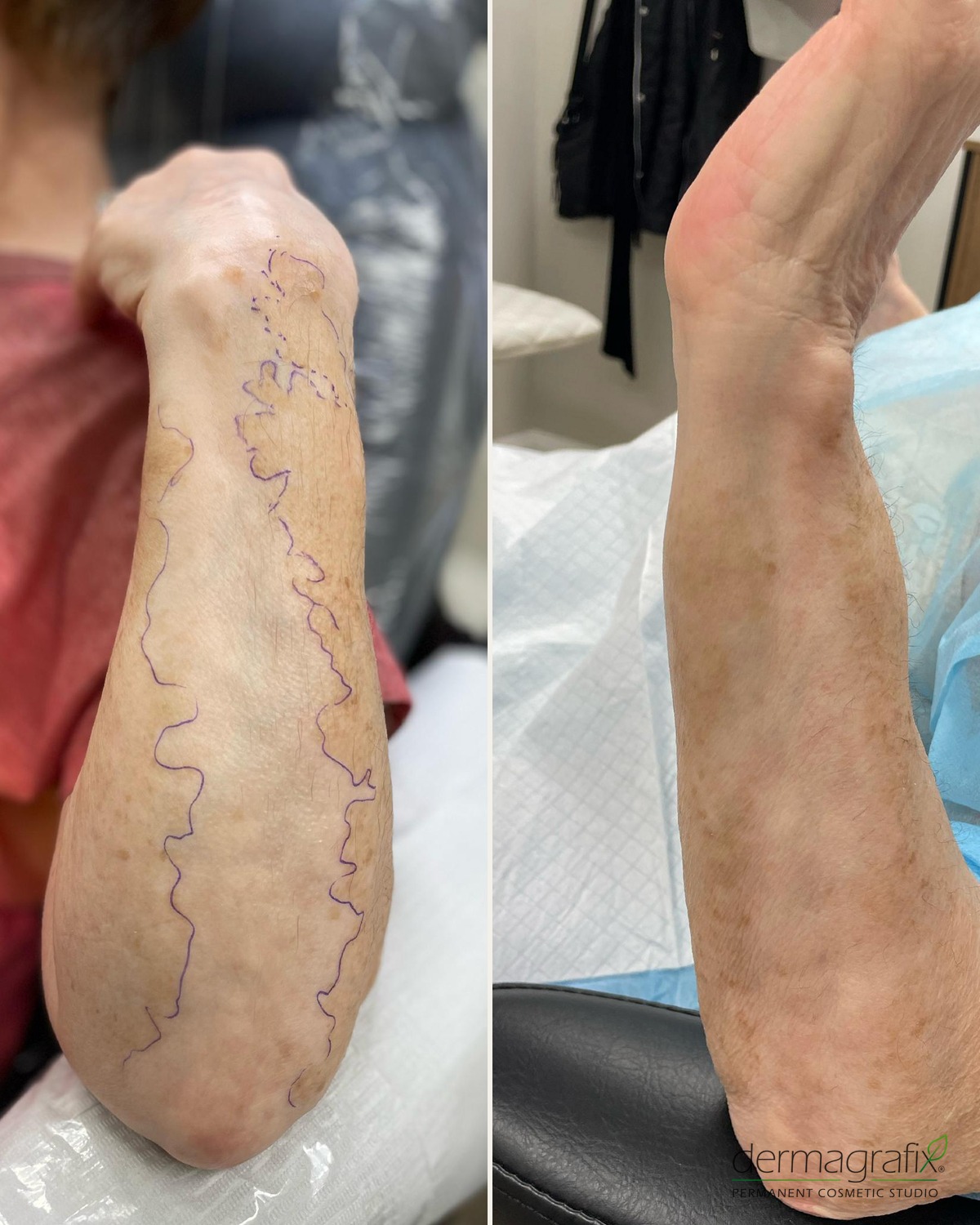
The short version: when your skin condition is stable, restorative tattooing tends to give beautiful, lasting results — and most of the people we see are in exactly that place. Timing is simply part of the plan. There is a well-documented pattern in dermatology called the Koebner phenomenon, in which skin that has been injured while a condition is active can develop new involvement along that line. It shows up in vitiligo, psoriasis, lichen planus, and other inflammatory conditions, and it is the reason we ask a few questions that may sound unrelated to tattooing.
A tattoo is a controlled injury
Every restorative tattoo — camouflage, re-pigmentation, areola work, scalp micropigmentation — places color into the dermis through thousands of tiny openings. Calm, settled skin handles that beautifully; that is why this work exists and why so many clients do so well. When a condition is flaring, the same controlled injury lands on skin that is already reacting, so we wait for the quiet window instead.
What this means for vitiligo
Vitiligo is the condition most often discussed alongside Koebnerization, and it is also one we camouflage often and successfully. When vitiligo has been stable for a meaningful stretch of time, results tend to blend well and hold the way we expect. When it is actively spreading — new patches appearing, borders moving — that is a signal to settle things first with your dermatologist, then come back. Active today does not mean never; it usually just means later.
Dermatitis, eczema, and inflamed skin
Skin that is itching, flaking, or flaring heals unpredictably and holds color unevenly. Once a flare is calmed under dermatologic care, that same skin is often a very good canvas. Waiting for calm is not us turning anyone away — it is the difference between a result that stays even and one that has to be chased.
Alopecia and scalp work
Alopecia areata is autoimmune and moves in cycles of activity and quiet. Scalp micropigmentation is often an excellent answer for it — the plan simply depends on where you are in that cycle. If the pattern is stable, we can design confidently. If patches are still shifting, we stage the work so it grows with you rather than needing to be redone.
Why we may ask you to see your dermatologist first
Not everyone needs this step. Many clients arrive already under a dermatologist's care, with a clear diagnosis and a condition that has been quiet for a long time — for them it is usually just a quick note or a confirmation at their next visit. Others have noticed changes in their skin but have never been formally diagnosed, or were diagnosed years ago and have not been followed since. If that is you, seeing a dermatologist is the most useful first step you can take, for your health as much as for the tattoo.
What we are looking for is simple: is the condition currently active or stable, are you on any treatment that affects healing, and does your physician see any reason to wait. Whether you get that answer before your consultation or shortly after is up to you — we are glad to talk through goals either way.
Sorting this out early, rather than after a plan is built, means we can move forward with confidence when the timing is right. It is the same reason we spot test, layer translucently, and space sessions: we want the result you will still love a year from now.
A spot test is often a great first step
Where there is any question about how your skin will respond, we can place a small, discreet test area and let it heal fully before committing to a larger region. It shows us how your skin accepts color and how it behaves afterward — an easy, low-pressure way to move ahead. A spot test is a small paid session, and the fee is money well spent when it saves you a larger correction later.
This article is general education, not medical advice. Decisions about your skin condition and its treatment belong with your dermatologist or physician.
Read more about scar camouflage tattooing, or see healed results from real clients.
Pennsylvania
Our Doylestown studio welcomes clients from Bucks County, Montgomery County, Philadelphia and the greater Philadelphia area. See restorative tattooing and SMP near Philadelphia.
Florida
Our Stuart, FL studio welcomes clients from the Treasure Coast and Palm Beach coast, including Palm City, Jensen Beach, Port St. Lucie, Tradition, Hobe Sound, Jupiter, Tequesta and Palm Beach. See restorative tattooing and SMP on the Treasure Coast.