Education
Vitiligo and Camouflage — Only If It's Something You Want
Let's start where most articles on this subject don't: not everyone with vitiligo should get a tattoo, and no one should feel they need one. Confidence is not a single look. We have clients who wear their vitiligo openly and beautifully, and that is a complete answer.
The only good reason is your own
Camouflage is worth doing when it is something you want for yourself — not because someone commented, not because a photo bothered someone else. We embrace every vision of personal confidence and what that means to you. If that vision includes evening out an area that has been on your mind for years, we are glad to be the ones who do it. If it doesn't, that is equally right.
Camouflage changes appearance, not the condition
Pigment matched to your surrounding skin is layered into depigmented areas to reduce contrast. It is not a medical treatment for vitiligo: it does not restore melanocytes or stop the condition. Medical treatment questions belong with your dermatologist. Understanding the difference between melanin and tattoo pigment helps explain what camouflage can and cannot do.
Stability comes before tattooing
Active, spreading vitiligo is not a candidate. New patches can appear beside freshly matched skin, and needling can itself provoke spread — the Koebner phenomenon. We ask for a period of stability and your dermatologist's guidance before proceeding.
If you are considering it, this is our expertise
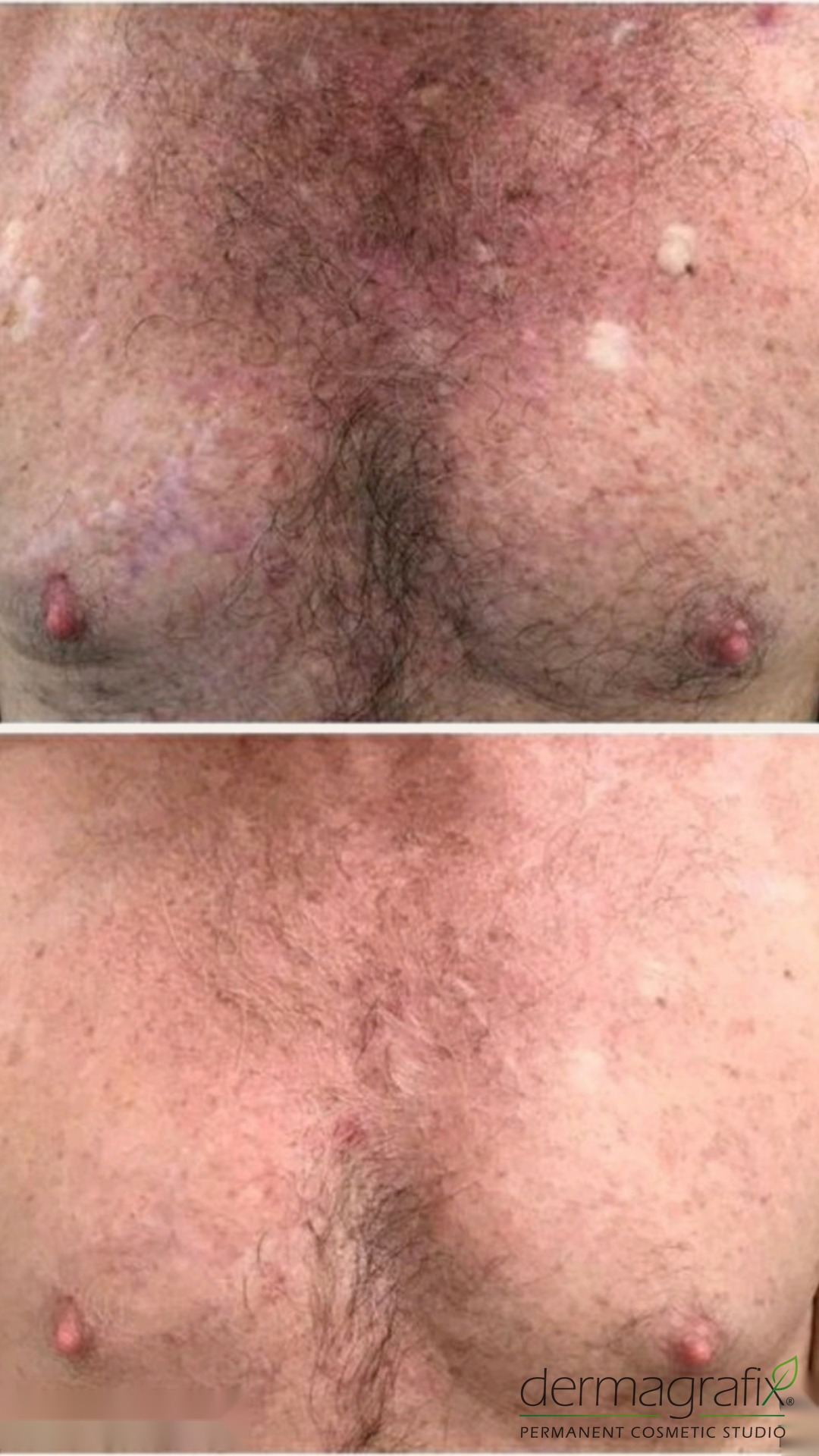
Re-pigmenting depigmented skin is precise work: custom-blended color, translucent layering, and edges that dissolve into the surrounding tone rather than stopping at a line. With modern advancements and the experience to back it, our vitiligo results are exceptionally effective — and the gallery is the honest version of what that looks like healed.
Color retention and spot testing
If you have concerns about how your skin will hold color — and that question comes up on every skin type — we can always perform a spot test in a discreet area first. It lets both of us see how your skin accepts and keeps the color, and whether it reacts, after several weeks of healing before committing to a larger region.
Large regions and sensitive areas
We are able to treat broad areas — chest, back, arms, legs — as well as more sensitive regions, with the help of anesthetic to keep you comfortable throughout. Large-area work is mapped and staged rather than attempted all at once, so coverage stays even and your skin gets time between passes.
Expect a process, not an appointment
Multiple sessions are required to reach the full result. Color settles, softens, and is then built on again, which is how a match ends up looking like skin instead of paint. Realistic expectations and following the guidance of your experienced restorative artist — on sun, healing, and timing between visits — are what carry the result.
What a healed result can and cannot promise
The goal is reduced contrast and softly blended edges. Close up or in strong light, you may still see where the patches are. Your surrounding skin also changes with sun exposure while tattoo pigment does not tan; seasonal darkening can make the contrast more noticeable again. Healed photos are more useful than fresh ones when deciding whether that result meets your expectations.
Planning sessions and cost
Our restorative work runs $399 to $799 per session depending on the area, with large regions planned in stages. Read the pricing and treatment-plan guide for what affects the quote. A virtual consultation can start the conversation before travelling to our Doylestown or Stuart studio; it is not a commitment to treatment.
Read more about scar camouflage tattooing, or see healed results from real clients.
Pennsylvania
Our Doylestown studio welcomes clients from Bucks County, Montgomery County, Philadelphia and the greater Philadelphia area. See restorative tattooing and SMP near Philadelphia.
Florida
Our Stuart, FL studio welcomes clients from the Treasure Coast and Palm Beach coast, including Palm City, Jensen Beach, Port St. Lucie, Tradition, Hobe Sound, Jupiter, Tequesta and Palm Beach. See restorative tattooing and SMP on the Treasure Coast.