
Education
Melanin vs. Pigment: How Skin Color and Tattoo Color Behave Differently
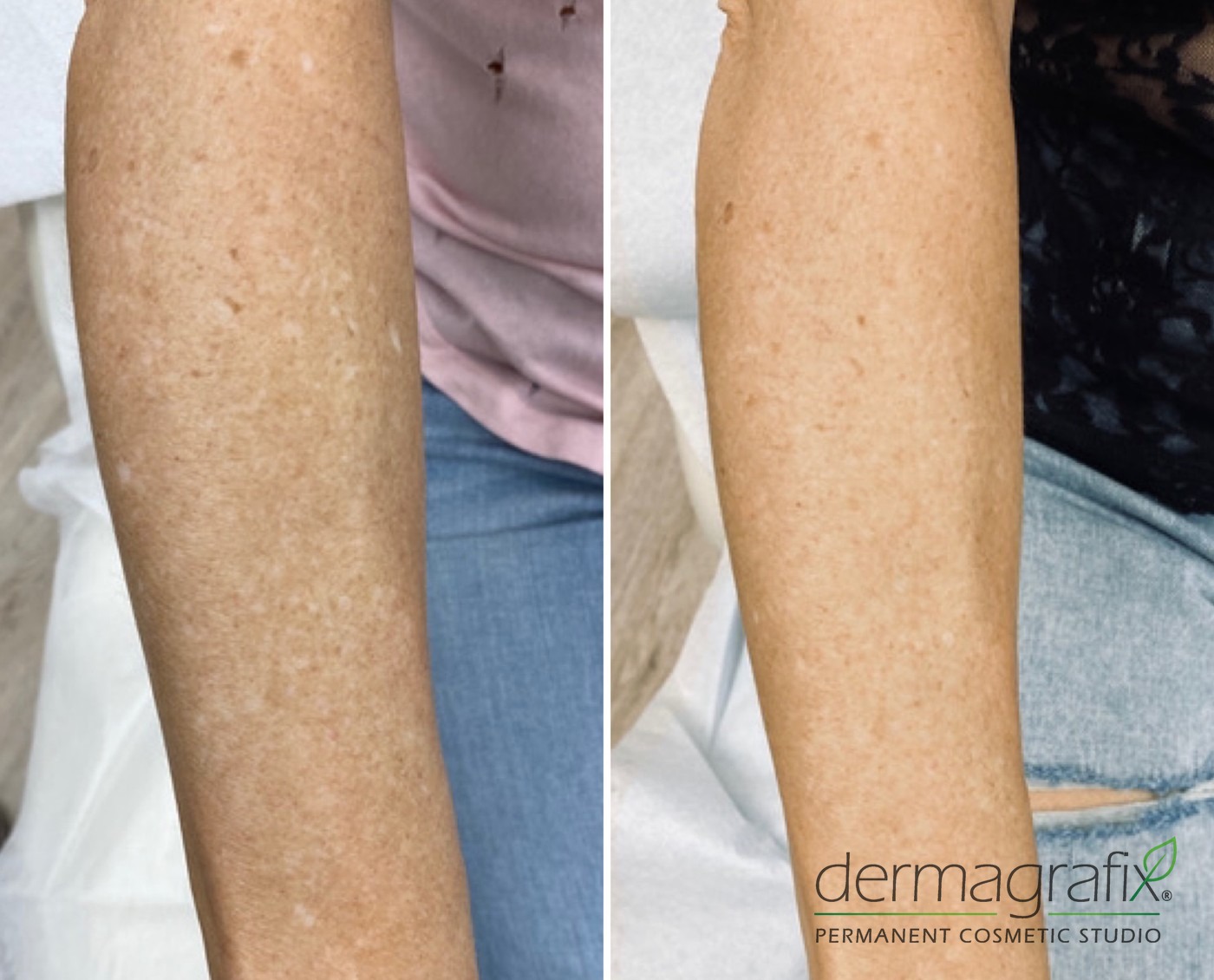
People often use "pigment" to mean skin color, and it is an easy shorthand — but in this work the two words describe two entirely different things. Understanding the difference explains almost everything about how a restorative tattoo heals, why the color moves in the first months, and why results are refreshed rather than finished.
Melanin is something your body makes
Melanin is produced by specialized cells in your skin, and it is renewed continuously for as long as you are healthy. It responds to sun exposure, hormones, inflammation, medication, and healing. That is why your own skin tone is not a fixed value — it is a little different in August than it is in February, and different again after an injury while the area recovers.
Pigment is something we place
Tattoo pigment is an inert particle implanted in the dermis. Your body does not make it, cannot renew it, and slowly breaks it down and carries it away. Over the years it softens, may warm or cool slightly, and eventually fades. That is normal and, in restorative work, useful: color that fades gradually can be adjusted as you change, rather than locking a match in place forever.
What that means for a color match
A match is made to your skin as it is today. Both sides of that match then move — your melanin responds to life, and the pigment quietly fades. This is why refreshes exist and why they are part of the plan rather than a sign of failure. A result that looked seamless three years ago and looks a shade off today has not gone wrong; it has simply drifted, and drift is adjustable.
The healing window, in order
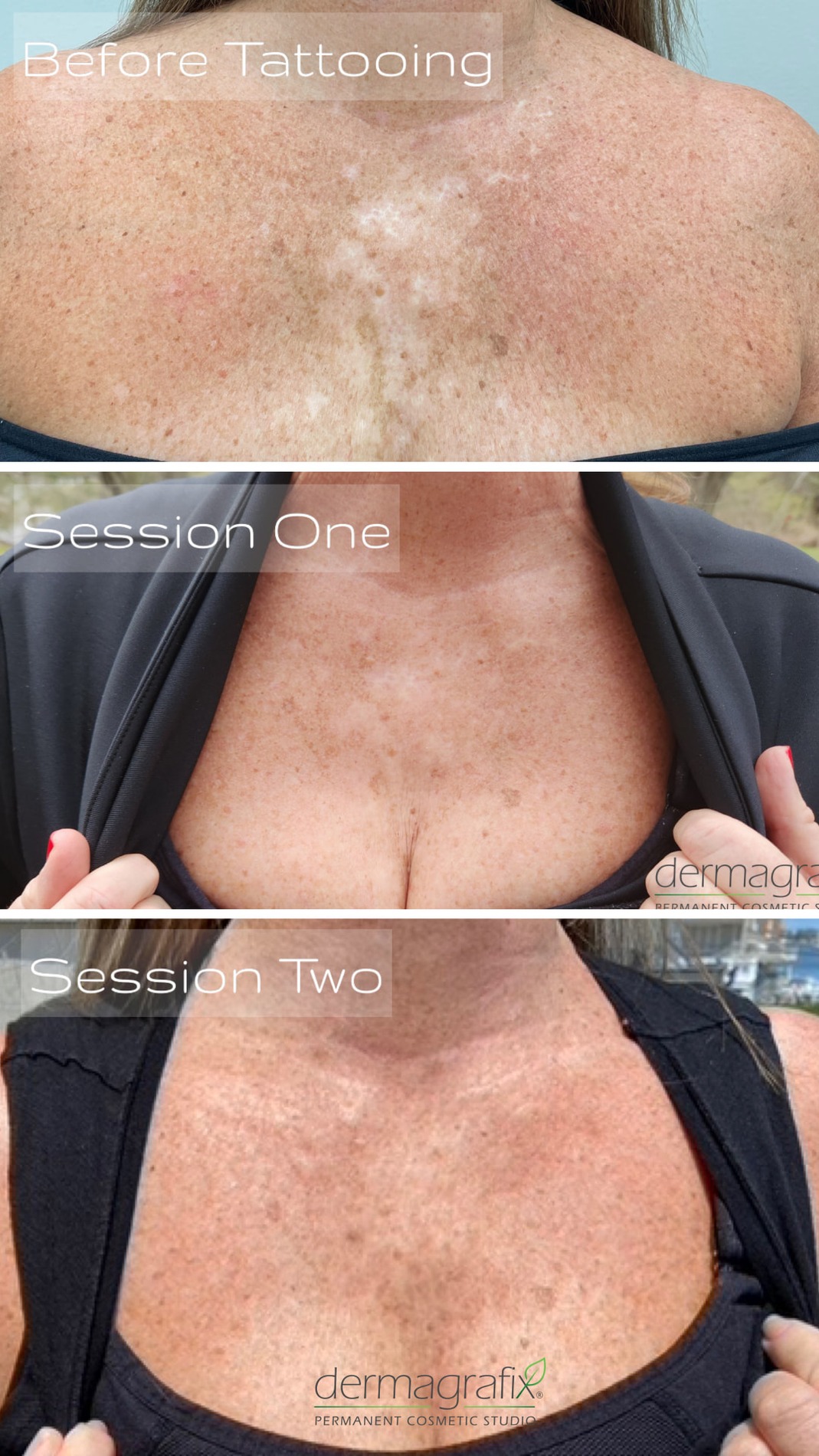
Immediately after a session the area is flushed and the color looks darker and more intense than the final result. Over the following week or two the surface heals and flakes, and the color can seem to disappear almost entirely — a phase often described as ghosting. It has not gone; it is sitting under a fresh layer of skin that has not yet cleared. From there the color slowly re-emerges and continues settling for months.
Temporary color change while the skin repairs
Because melanin responds to healing, the skin around and within a treated area can temporarily darken or lighten. This can begin immediately and, in some people, take up to roughly four months to fully settle. It is more commonly noticed in melanin-rich skin, where those cells are naturally more responsive. It is a normal part of repair, not a complication — and it is precisely why we do not judge or correct a result early. Adjusting to a color that is still moving means adjusting to the wrong target.
Read more about scar camouflage tattooing, or see healed results from real clients.
Pennsylvania
Our Doylestown studio welcomes clients from Bucks County, Montgomery County, Philadelphia and the greater Philadelphia area. See restorative tattooing and SMP near Philadelphia.
Florida
Our Stuart, FL studio welcomes clients from the Treasure Coast and Palm Beach coast, including Palm City, Jensen Beach, Port St. Lucie, Tradition, Hobe Sound, Jupiter, Tequesta and Palm Beach. See restorative tattooing and SMP on the Treasure Coast.