Education
Microneedling vs. Microchanneling vs. RF Microneedling: Which Is Right for Scars, Stretch Marks and Your Skin?
If you've started looking into treatments for a scar, stretch marks or tired skin, you've probably run into three words that sound almost the same: microneedling, microchanneling and RF microneedling. They're often sold as if they were the same thing. They aren't. Each one injures the skin in a different way, and that difference decides who it helps, who it doesn't, and who it can actually set back.
We've spent years watching how skin heals, both as tattoo artists and with an aesthetician's eye for pigment and scar tissue. To be clear, we aren't knocking anyone else's methods. Every one of these treatments has its place; we simply don't offer all of them. Here's how we think about all three, and why, for the work we do, we believe ProCell microchanneling and our own fine, targeted needling are the best fit.
What they all have in common
Every one of these treatments works the same basic way: create very small, controlled injuries so the skin responds by repairing itself. That repair brings new collagen and elastin, and over months the skin can become smoother, firmer and more even. The question is never just "does it make collagen?" It's how much trauma it takes to get there, and how your particular skin reacts to that trauma.
Traditional microneedling
Microneedling usually means a pen or roller with needles that go into the skin, often at deeper settings and dragged or glided across the surface. Done well, it can improve texture. The downside is that dragging and deeper passes can tear rather than puncture, causing more inflammation, more redness and a longer recovery. For skin that reacts easily, that inflammation is exactly what triggers dark spots or light spots afterward.
Rollers in particular enter the skin at an angle and leave it at another, which makes small tears instead of clean channels. That's one reason we steer people away from rolling at home. (We go into the at-home side in our DIY microneedling article.)
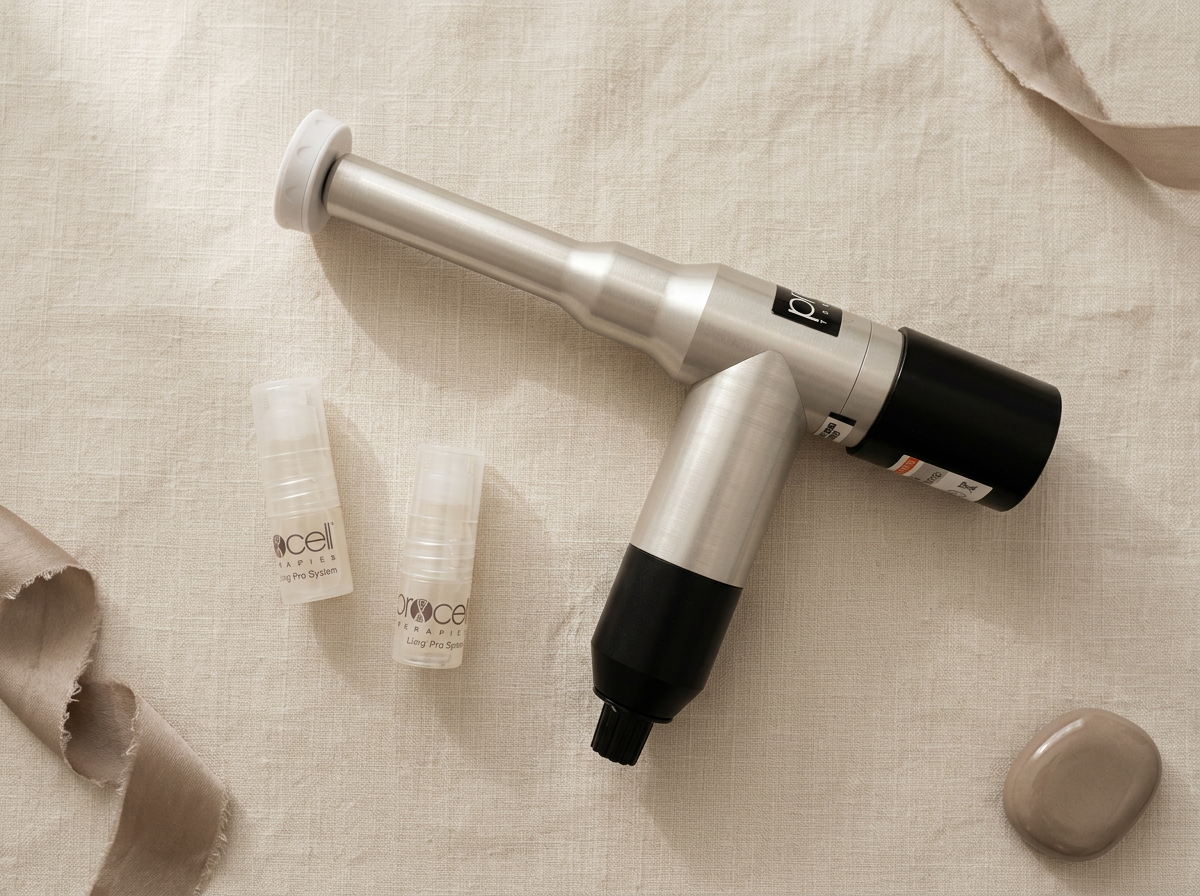
Microchanneling, and why we prefer ProCell
Microchanneling uses many very fine, short needles that press straight in and lift straight out, stamping the skin rather than dragging across it. The result is a dense grid of tiny, clean channels with much less surface damage. The skin still gets the signal to rebuild, but with less inflammation along the way.
ProCell pairs that with growth-factor serums applied into the fresh channels, which support the skin's own repair. In practice, here's what that means for our clients:
Gentler on reactive skin. Less trauma means less inflammation, and less inflammation means a lower chance of the skin overreacting with pigment changes. That matters enormously for scars, which are already unpredictable.
Shorter, easier recovery. Most people look flushed for a day or so rather than raw for days.
Precise for scar work. We can work right on and around a scar, softening tight, tensile tissue and improving texture, often as the first step before any color is ever added. It's the core of our ink-less skin retexturing.
Good for overall rejuvenation. On the face, neck, chest and hands it can help with fine lines, texture and dullness without the downtime of heavier treatments.
It isn't instant. Collagen rebuilds over months, so microchanneling is done as a series, spaced out to give the skin time to remodel between sessions.
ProCell isn't our only tool
ProCell is wonderful for broader areas, but its needle head is a fairly large cluster. Some scars need something far more tailored. For those, we use our tattoo machines with fine-gauge needles and very small clusters. We get the same straight-in, straight-out stamping effect, but we can place it exactly where it's needed: inside an acne pick scar, along a depressed stretch mark, or into a narrow dip in a surgical scar, without touching the skin around it.
Why we treat only the depression
This is the part we most want people to understand. When a depressed scar or stretch mark is treated together with the skin around it, for example running a larger microneedling pen over an entire stomach of stretch marks, collagen is built everywhere, including in the skin that already sits higher. The low areas rise, but so do the high ones, and the difference between them barely changes. That's why many people feel their results were disappointing after whole-area treatment.
When we work only inside the depression, the new collagen forms where it's missing. The low area is gradually raised to meet the surrounding tissue, so the surface evens out instead of everything simply lifting together. It takes a steadier hand and more time, but it's what makes the difference in the final result.
It isn't only about building collagen
Needling isn't always about adding something. With fibrous, raised or hypertrophic scars, we needle through the thickened scar tissue to break it up, so the scar can heal back flatter and softer over time. The goal there is to loosen and calm tissue that has built up too much, not to build more.
This is different from keloids. Keloid scars grow beyond the original wound and can react to injury by growing further, so we don't needle them this way.
RF microneedling: needles plus heat
Radiofrequency (RF) microneedling adds heat. Insulated needles go into the skin and deliver radiofrequency energy at the tips, heating the deeper layers. That heat can tighten tissue and give a stronger collagen response, which is why it's popular for skin laxity and deeper texture.
But heat is a double-edged tool. It's a known trigger for melanin, so it carries more risk for anyone who tends to darken after injury. And because heat works on the deeper tissue, it isn't the right choice for everyone, especially people who don't want to lose any fullness. We cover both of those below.
Which one fits your situation?
Scars
For most surgical, injury and acne scars, we start with ProCell microchanneling. It softens and flattens texture with less risk of the skin reacting. RF can help some deeper, tethered scars, but its heat makes it a riskier choice on reactive skin, and we'd rather not add a pigment problem to a texture problem.
Stretch marks
Stretch marks are a form of scarring. Needling can help their texture, making them feel and look smoother and less crepey, especially when it's focused inside each depressed mark rather than across the whole area. What needling doesn't reliably do is bring color back into white, silvery stretch marks. Those have lost pigment, and more collagen won't restore it. When the color difference is what bothers you, that's where stretch mark camouflage comes in, often after texture work first. Red or purple stretch marks that are still fresh tend to respond better to treatment than old, settled ones.
Skin that tends to hyperpigment
If you darken easily after a cut, a breakout or a bug bite, your melanin is reactive. That's common in deeper skin tones and in many olive and medium skin tones too. For this skin, inflammation and heat are what we're trying to avoid. ProCell's gentler approach is usually the safer choice, while RF microneedling's heat carries a higher risk of post-inflammatory dark spots that can take months to fade. We also adjust aftercare for this skin type, as we explain in our hyperpigmentation article.
Skin that tends to hypopigment
Some skin goes the other way and loses color where it's been injured, leaving lighter patches. People with vitiligo, or with a history of white spots after injury, fall into this group. Aggressive, deep or hot treatments are the bigger risk here. Gentle, well-spaced microchanneling is the more cautious route, and sometimes the right answer is to skip needling an area altogether.
Wanting more volume vs. wanting less fullness
This is the part most people never hear about. RF microneedling's heat works in the deeper tissue, and that same heat can affect fat. For someone who wants to tighten a softer jawline or reduce a little fullness, that can be helpful. For someone whose face is already lean, or who is starting to lose volume with age, it may work against the goal, and lost fat doesn't come back on its own.
If you're looking to restore a fuller, healthier look rather than slim an area down, microchanneling is usually the better fit. It focuses on the skin's surface layers, collagen and texture, without targeting fat underneath. The same thinking applies to other areas of the body: tightening loose skin is a different goal from improving scars or texture, and the treatment should match the goal.
The short version
Microneedling can improve texture, but deeper or dragged passes mean more trauma and more risk for reactive skin.
ProCell microchanneling creates clean, fine channels with less inflammation. For the work we do, it's our first choice for broader scar, skin and rejuvenation work where you want to keep your natural fullness.
Targeted fine needling with our tattoo machines and tiny clusters lets us treat only the depressed part of acne pick scars, stretch marks and other dips, so they rise to meet the surrounding skin.
RF microneedling adds heat for tightening, which can help laxity but carries more risk for skin that darkens and may reduce fullness you'd rather keep.
Not sure which is right for you?
That's exactly what a consultation is for. We look at your scar or skin concern, how your skin has healed in the past, and what you're hoping to achieve, then recommend the approach that makes sense, even if that means telling you a treatment isn't right for you.
Read more about ink-less skin retexturing and scar camouflage tattooing, or see healed results from real clients.
Pennsylvania
Our Doylestown studio welcomes clients from Bucks County, Montgomery County, Philadelphia and the greater Philadelphia area. See restorative tattooing and SMP near Philadelphia.
Florida
Our Stuart, FL studio welcomes clients from the Treasure Coast and Palm Beach coast, including Palm City, Jensen Beach, Port St. Lucie, Tradition, Hobe Sound, Jupiter, Tequesta and Palm Beach. See restorative tattooing and SMP on the Treasure Coast.