A letter from our studio
Self-Harm Scar Camouflage: A Safe, Supportive Place to Start
You don't owe anyone your story
Maybe you've worn long sleeves through a July heatwave. Maybe you've practiced an answer in your head for the moment someone asks, and felt your shoulders tighten when a sleeve rode up in the checkout line. Maybe you're just tired of being looked at in a particular way.
We want to start by saying something clearly: wanting these scars to be less visible is a completely understandable choice. You shouldn't have to plan your clothes, your answers, or your days around them. Our goal is simple: to help them become quieter, so they're no longer the first thing you or anyone else notices.
We've sat with many people in this exact place. Often they've already done a great deal of healing on the inside, and now they're ready to turn to the skin, so the scars can fade into the background instead of being the first thing anyone sees. If that's where you are, we'd be honored to help.
"We'll ask a few simple questions about the scars so we can treat them well. You don't need to go deeper than that."
To plan safely, we do need some basic information about your scars, like roughly how old they are and how they've healed. That's about the skin, not the story behind it. You share only what you're comfortable sharing.
What it actually feels like to come in
You'll be in a private room. Nobody walks through. We'll talk first, about what you hope for and what worries you. You can take breaks during a session whenever you need them, and we'll build a schedule that works with your life.
Photos are only taken if you agree, and you decide whether they're ever shared. Many of the people we work with tell us the hardest part was booking the consultation. Once they're here, it feels less like an appointment and more like being understood.
Being honest about healing
This is the part most places skip, and it's the part we think matters most. Softening a scar means working in the scar. Right after a session, the lines usually look red, raised, and fresh again, and sometimes more noticeable than they did when you walked in.
For some people, that's hard to see. Fresh redness on the same lines can look a lot like the scar did back then, and it can bring up feelings you weren't expecting. We tell you this up front so nothing catches you off guard. Knowing what to expect makes it much easier, and we'll be with you through each stage.
These are real clients' arms. Scars like these come in every shade and texture: pale lines that have lost color, pink lines that are still settling, raised or flat, few or many.
The photos below show scars before treatment, each next to the same arm right after a session. Look at your own pace, or skip ahead.
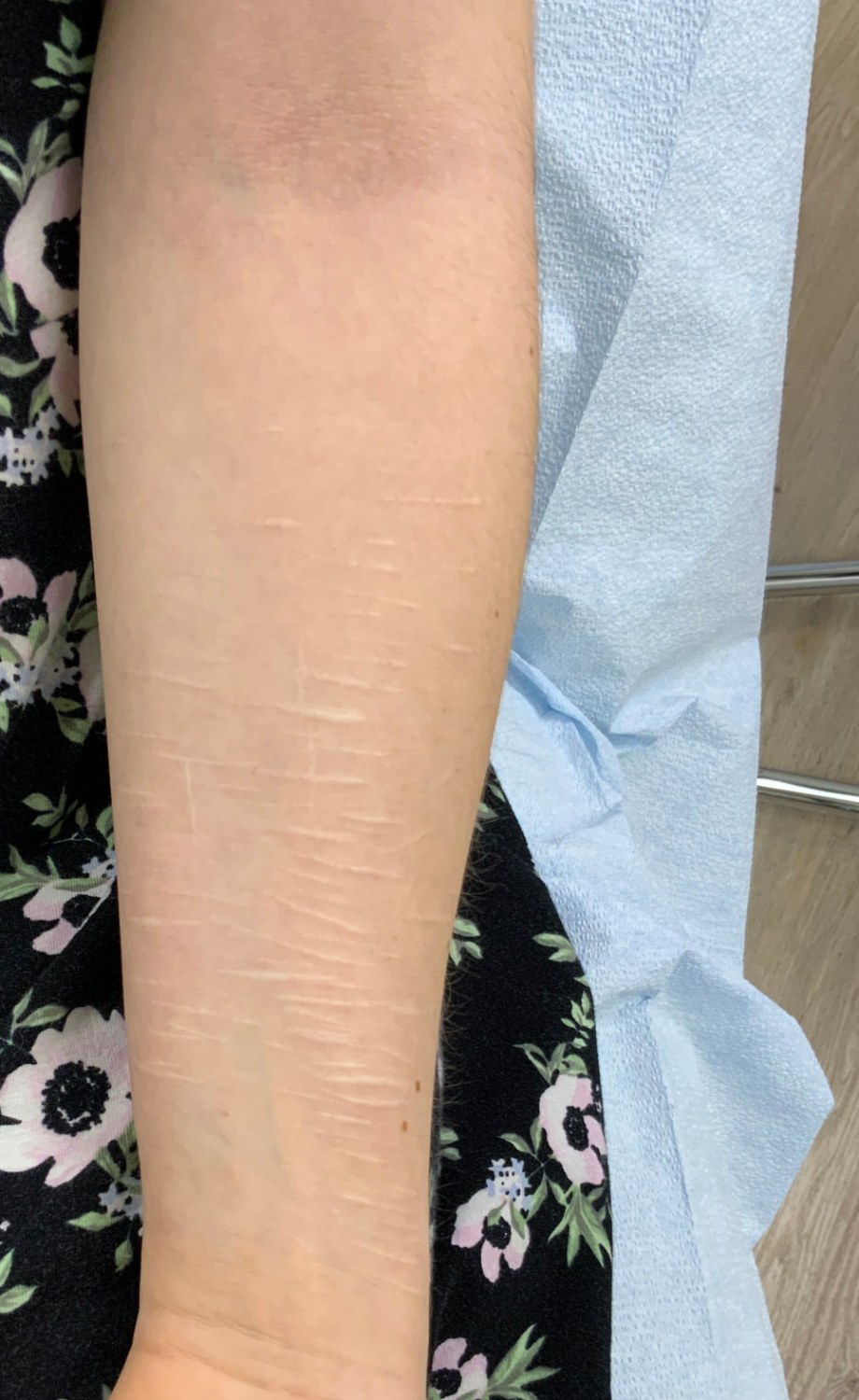
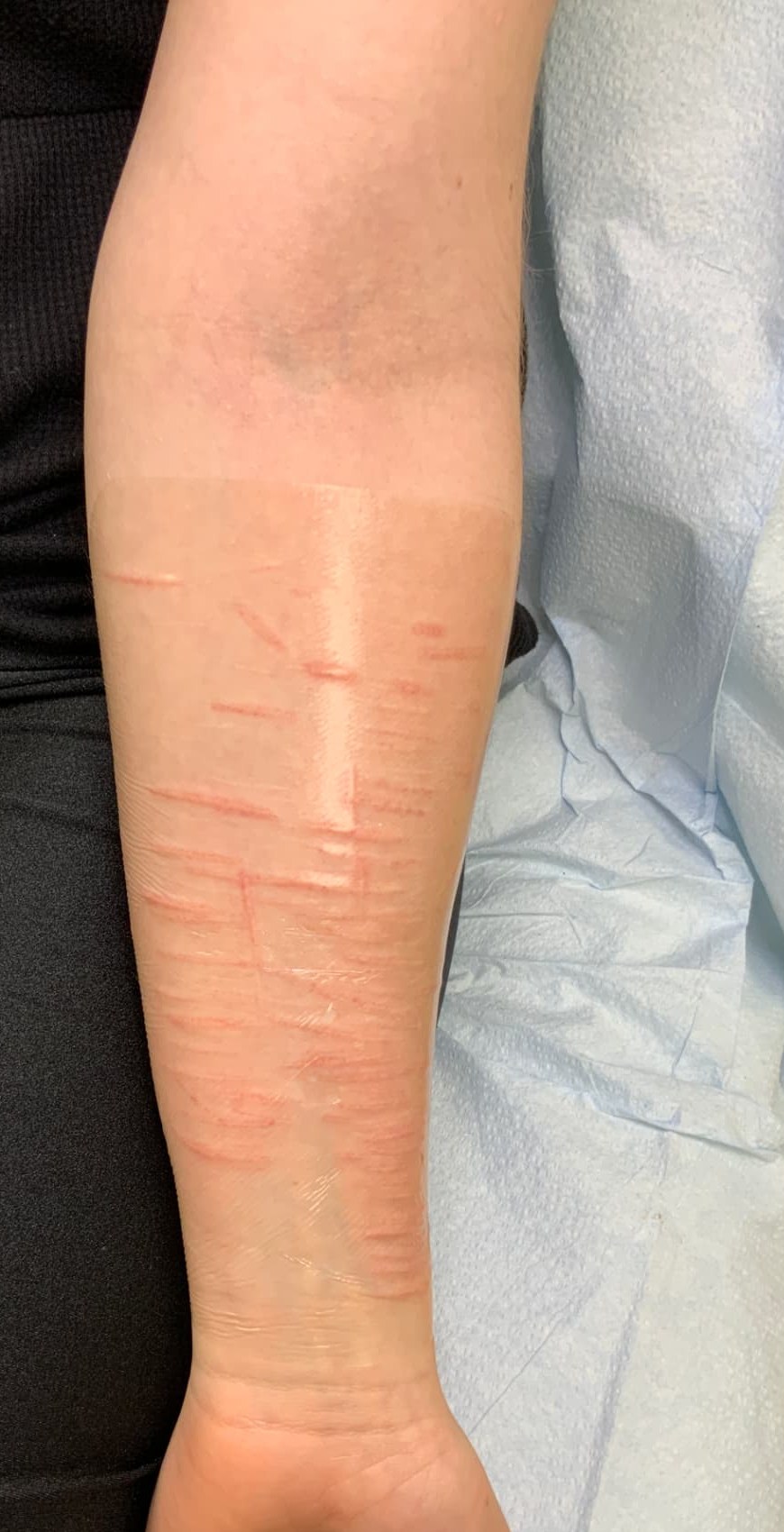
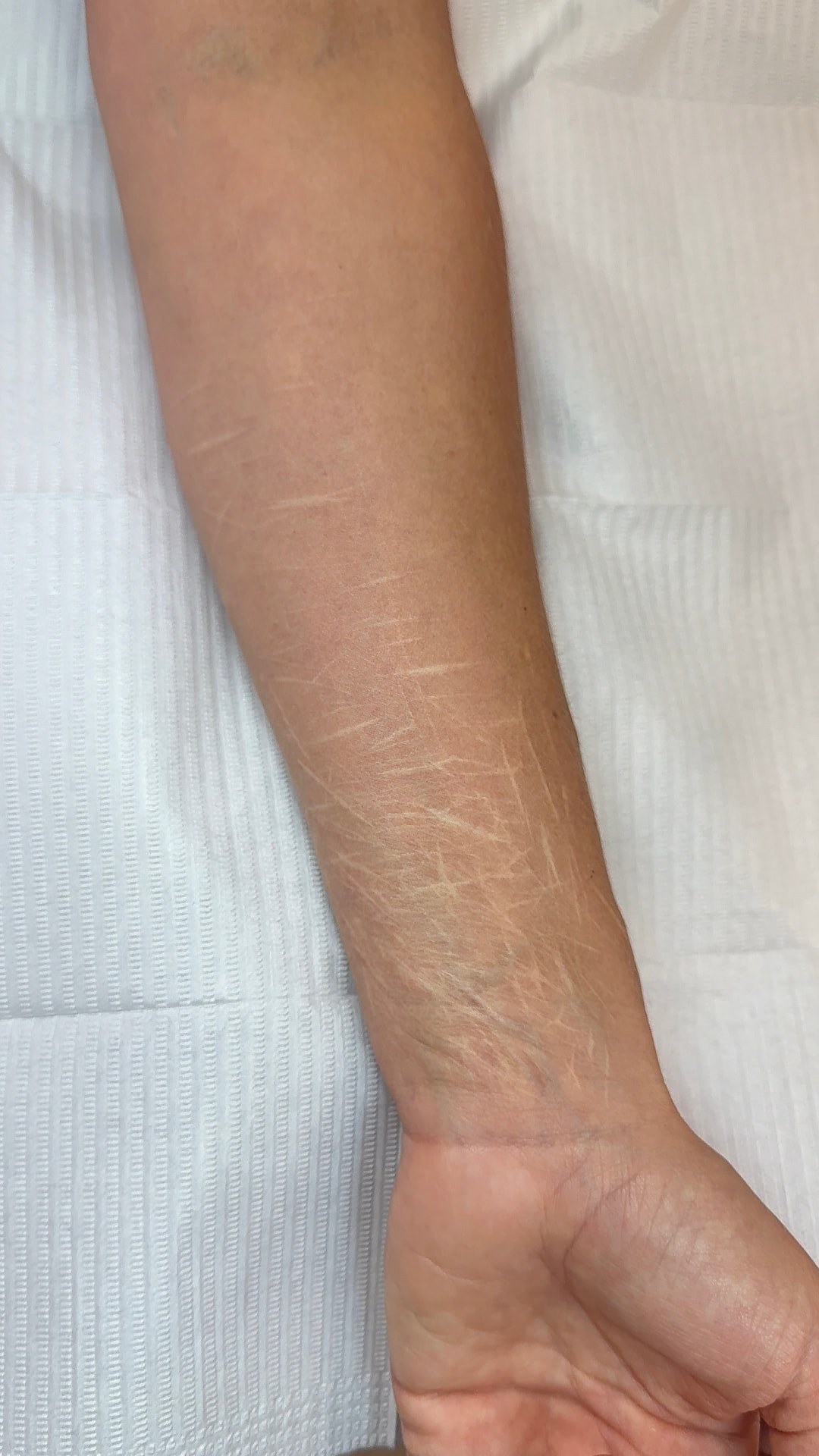
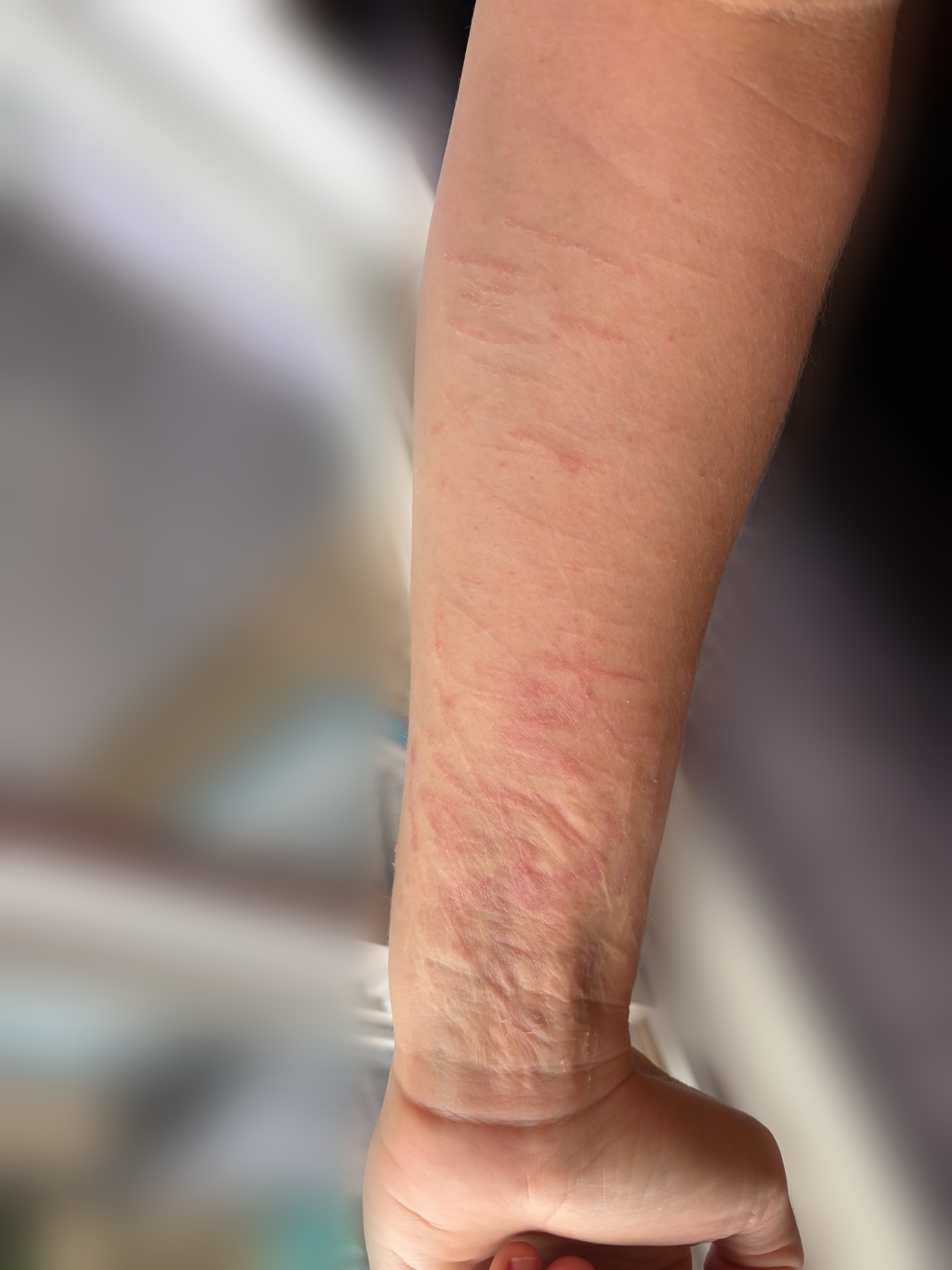
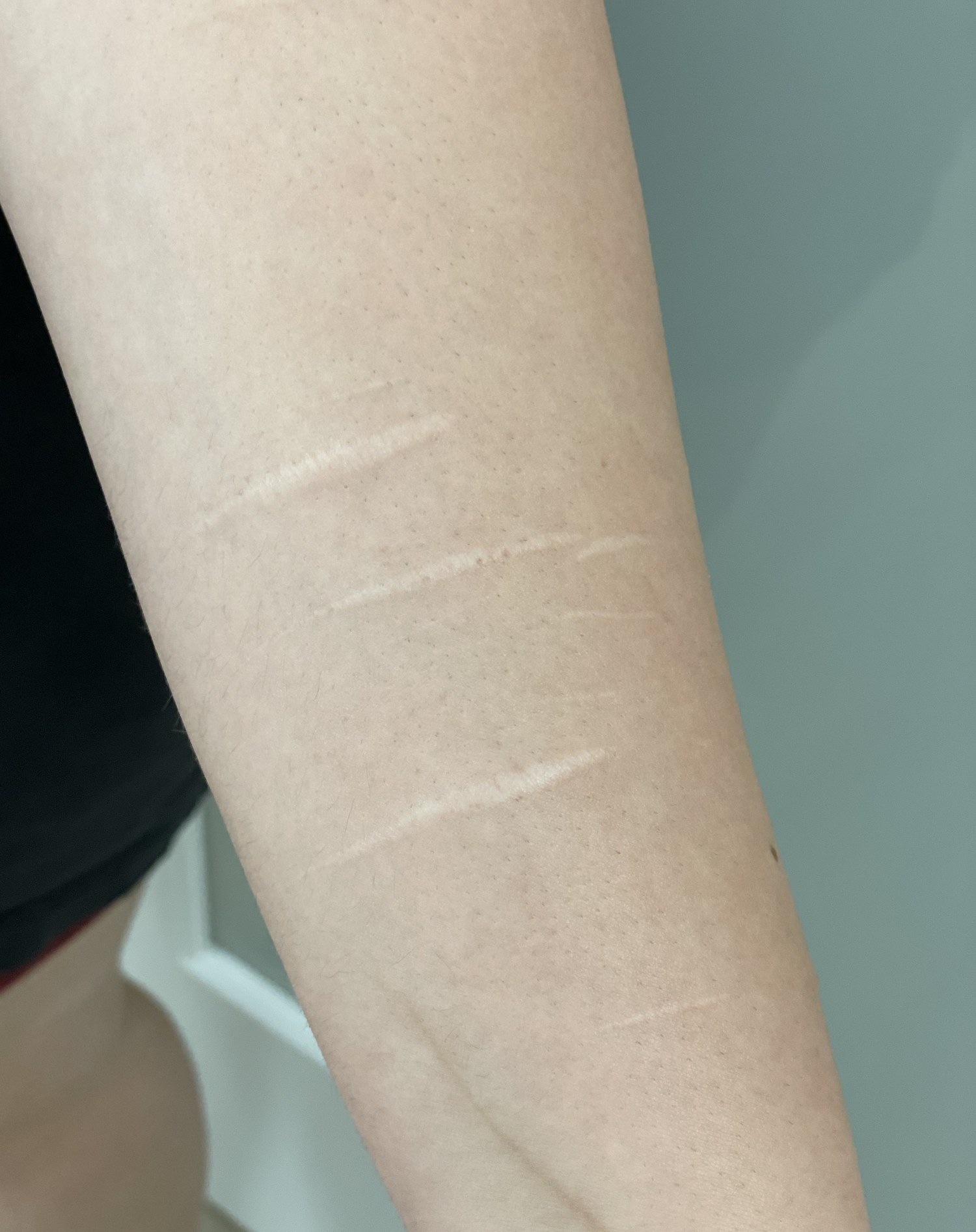
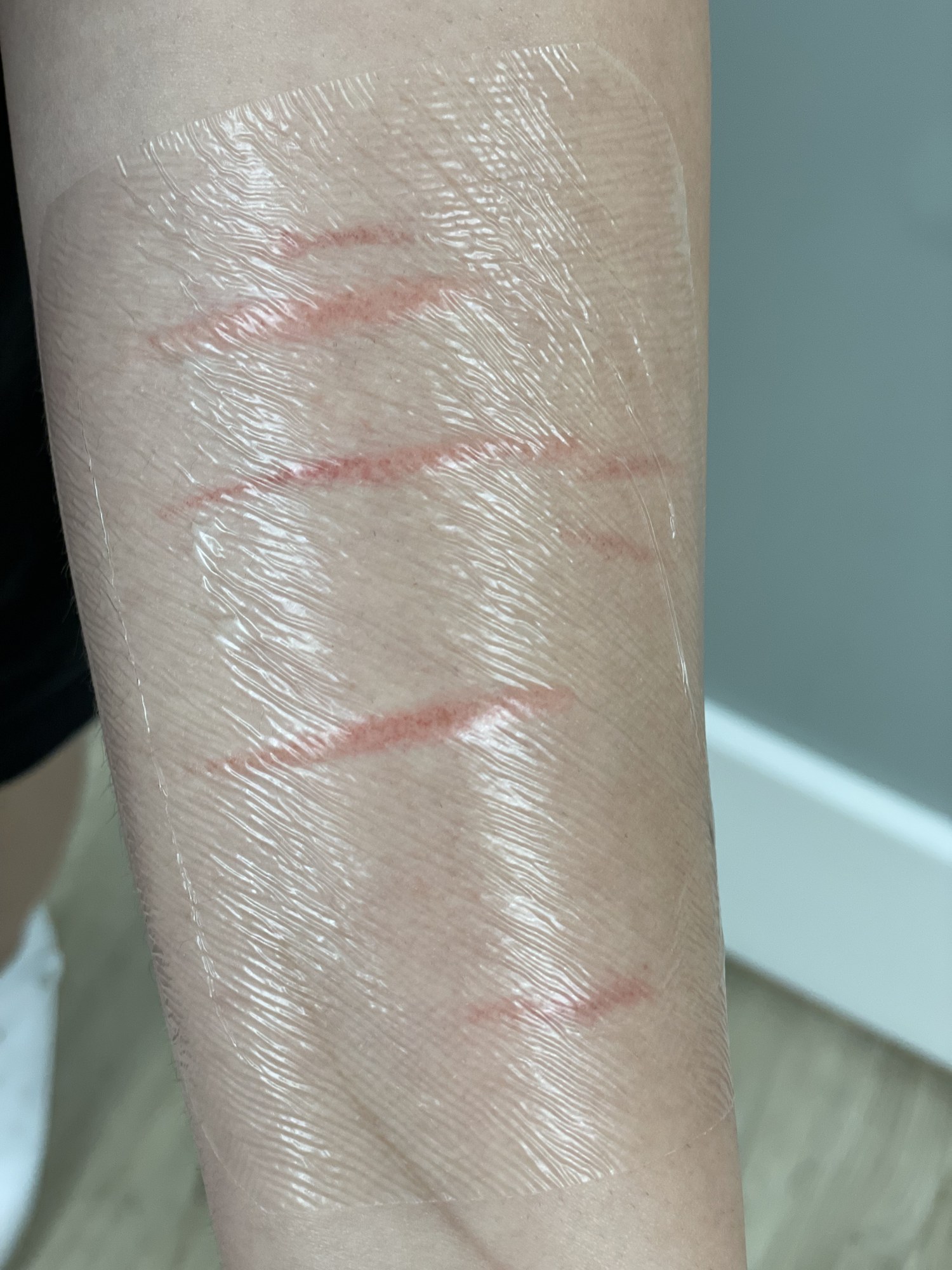
Redness right after a session is temporary. A clear dressing protects the area in the first days.
"It can feel like going backwards. It's the skin taking its time."
Friends, family, and the questions
A newly treated arm can look like a new wound. People who love you may notice, worry, and ask, sometimes in a way that lands heavily even when they mean well. Coworkers may glance. We take that seriously, because the stress of being seen while you heal is real.
So we plan with you. We time sessions around your life: family visits, holidays, work events, beach trips, and the seasons when long sleeves feel natural. We'll help you keep the area covered and comfortable during the red stages, so you can move through your days with less attention on your arm. We'll also talk through simple ways to explain it, or not explain it at all. "I'm having some skin treatment done" is a complete sentence.
The goal is less friction at home, at work, and in your own head, so the healing can just be healing.
What's possible, gently
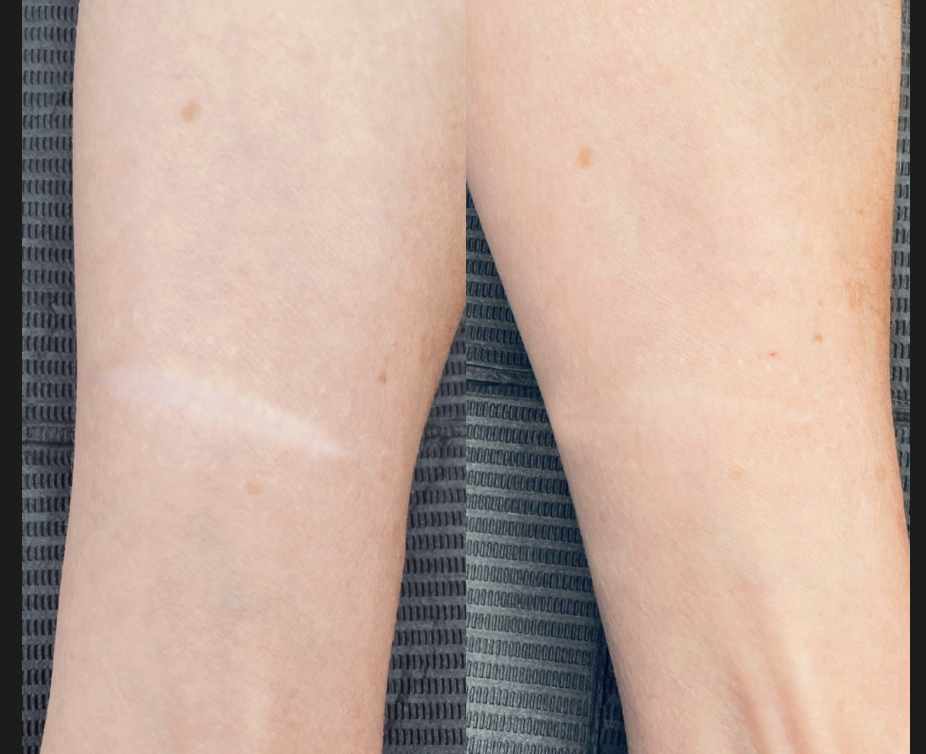
Raised or tight lines are often softened first with inkless needling, which helps the tissue relax and lie flatter. Where color is missing, we build it back in thin, translucent layers, adding the small details real skin has, like subtle variation, pores, and faint vessels. We never use one flat skin tone. A single color sits on top of skin like paint and ends up drawing more attention to the scar, not less.
Timing matters. Most scars need several months to a year to settle before they're ready, depending on how deep they are. Once we begin, sessions are usually spaced 2–3 months apart so the skin can fully heal in between. We're happy to shift appointments around holidays, work, and life, but we'll gently encourage you not to let long gaps build up. Waiting too long between sessions can slow progress and make the work harder to build on.
Along the way, progress can look uneven, with a patch that's improving next to one that still looks pink. That isn't a setback. It's simply how skin heals, and the people who follow their aftercare closely and keep a steady rhythm of sessions are the ones who see the best results.
When you're ready, we're here
There's no pressure to reach out before you're ready. When you do, the first step is just a conversation. We'll look at your skin, listen to what you want, and tell you honestly what we think is possible and what isn't. No pressure, no sales pitch, and no obligation to begin.
Whatever you decide, we're glad you're here reading this.
Questions people often ask
Do I have to explain how my scars happened?
No. We'll ask some basic questions about the scars, like how old they are and how they've healed, so we can treat them properly. You don't need to go deeper than that.
Will my scars look worse before they look better?
For a while, often yes. Right after a session the lines can look red and raised again. It's temporary, and we'll talk through it before you ever begin.
My scars are still fairly recent. Can I start?
Most scars need several months to a year to settle first, depending on how deep they are. If they're still red or changing, we wait. That wait protects your result.
How many sessions will it take, and how far apart?
Usually several, spaced about 2–3 months apart. We're happy to adjust timing around your life, but long gaps between sessions can slow progress, so we'll help you keep a steady rhythm.
Can you work around my schedule?
Yes. We plan sessions around holidays, family visits, work events, and the seasons when sleeves feel natural, while keeping sessions close enough together to build results.
This is client education, not medical or mental health advice.
Read more about scar camouflage and inkless scar retexturing, or see healed results from real clients.
Pennsylvania
Our Doylestown studio welcomes clients from Bucks County, Montgomery County, Philadelphia and the greater Philadelphia area. See restorative tattooing and SMP near Philadelphia.
Florida
Our Stuart, FL studio welcomes clients from the Treasure Coast and Palm Beach coast, including Palm City, Jensen Beach, Port St. Lucie, Tradition, Hobe Sound, Jupiter, Tequesta and Palm Beach. See restorative tattooing and SMP on the Treasure Coast.