
Scar camouflage
Is Your Scar Ready for Tattooing? Maturity, Texture, and Preparation
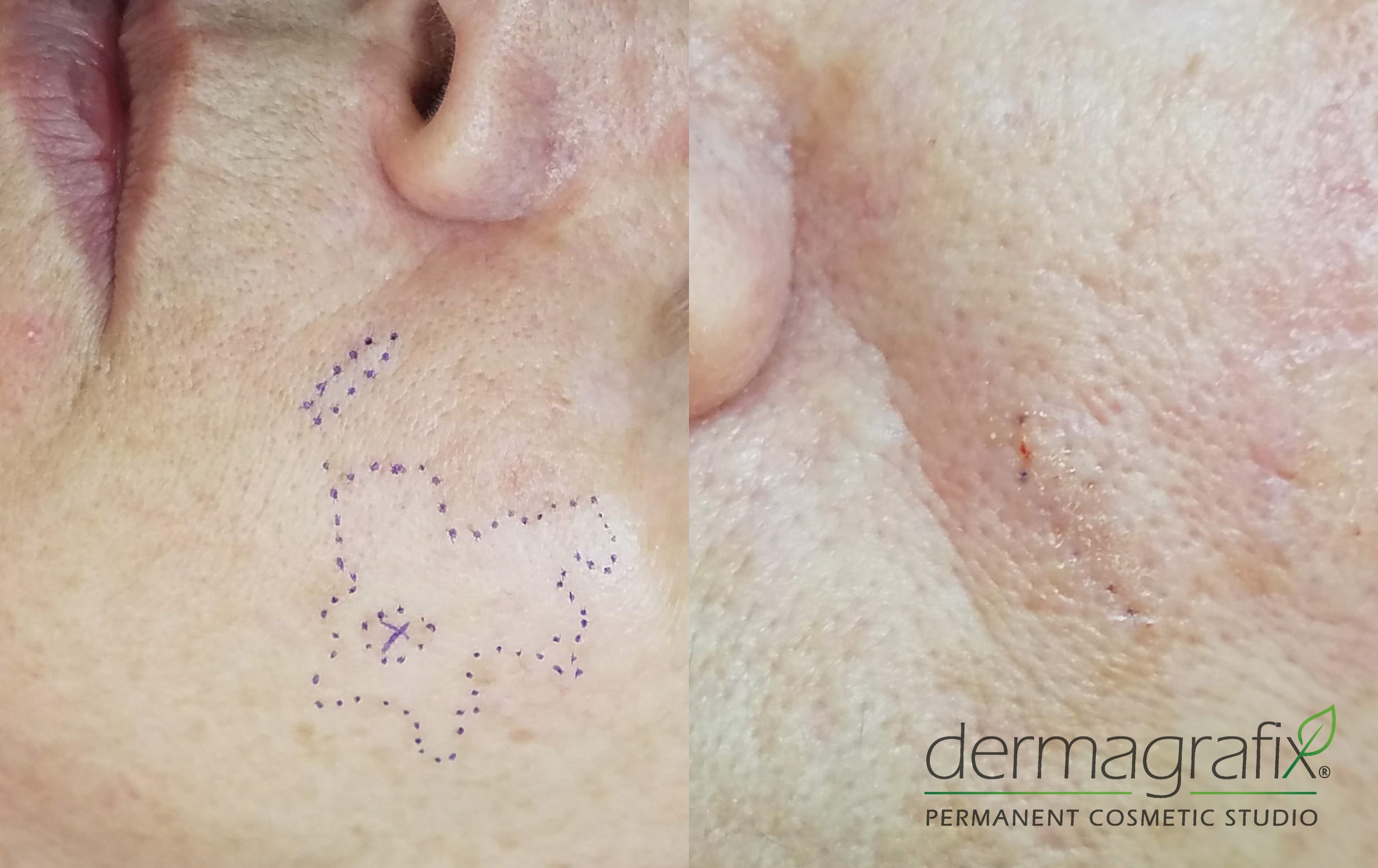
Yes — many scars can be tattooed. But the most common picture people have in mind is a single skin-colored pigment painted over the scar, and that is exactly what makes a scar stand out. A scar disappears when it starts behaving like skin, and skin is far more complicated than one color.
Which scars can be tattooed
Flat, mature, stable scars are the best candidates. Most scars need several months to a year to settle, depending on the severity of the trauma; mastectomy scars need at least three months, and longer is preferred. Raised, indented, tethered, or tight scars are a texture problem first — pigment cannot fix shadow — so they may need preparation treatments such as inkless needling before any color is placed. If preparation is recommended, it is part of getting the most natural result, not a detour.
Why one color makes a scar stand out
Real skin is translucent. Light passes into it and comes back through blood vessels, pores, fine texture, freckles, and subtle shifts in warmth. A solid flesh-tone patch has none of that, so it reads as a flat, pasty shape — often more noticeable than the scar was. We layer translucent color to pull in the natural transparency of skin, then add the details — vessels, pores, texture, and the small nuances around the scar — that let the eye pass over it.
Why it takes months, not weeks
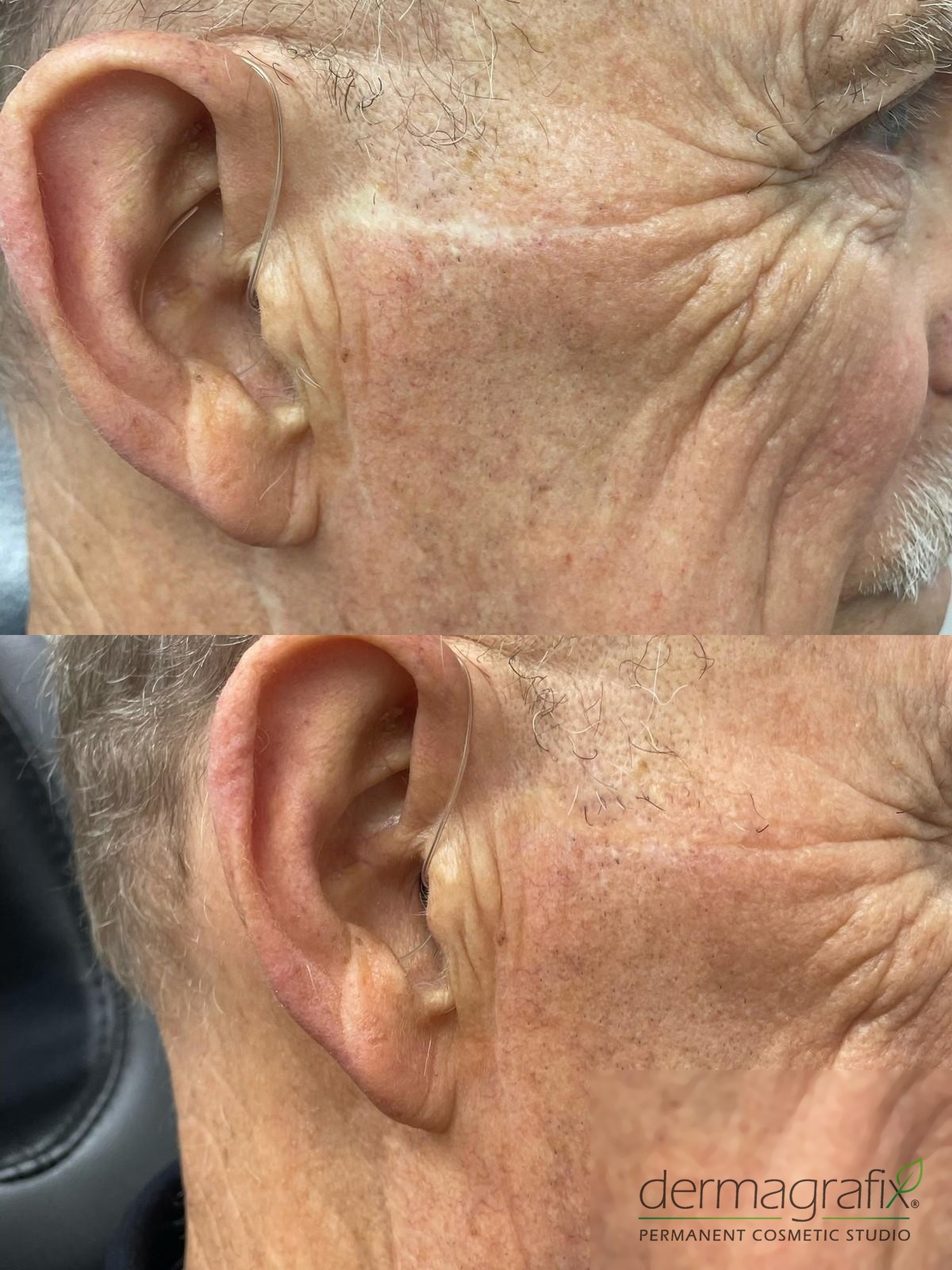
Every layer has to heal and settle before we can see what the skin kept, so sessions are spaced months apart. That waiting is where the result is actually decided. Rushing the next layer means building on color that hasn't finished changing.
When healing looks like going backwards
This is the part almost no one expects. Between sessions the scar may show several different colors within itself, and sometimes in the skin around it. Some skin — especially skin that tends to hyperpigment — reacts with temporary darkening, and occasionally we pause to calm reactive skin before continuing. It can feel like lost progress. It isn't. It means the skin needs time, and that results shouldn't be rushed.
It is easy to trust your eyes over the process in those weeks. The clients who reach the best results are the ones who follow their provider's instructions carefully and stay with the plan long enough to get to the finish.
A note on self-harm scars
For some people, the healing phase can be emotionally difficult. Fresh redness and color changes may briefly resemble how a scar looked during a very hard time. That is a normal response, and it is worth talking about at consultation so you know what to expect and can plan support if you want it. You set the pace.
Common questions
Can you tattoo over a scar?
Many scars can be tattooed once they are mature, flat, and stable. Raised, indented, or tight scars usually need preparation treatments first so the texture stops casting shadow.
How old does a scar need to be before camouflage tattooing?
Most scars need several months to a year, depending on how severe the original trauma was. Mastectomy scars need at least three months, and longer is preferred. Your provider confirms readiness at consultation.
Why can't a scar just be tattooed one skin color?
Skin is translucent and full of small details. A single solid color sits on top like makeup and makes the scar stand out. Natural results come from translucent layers plus details like vessels, pores, and texture.
Why does my scar look worse between sessions?
Healing skin cycles through different colors, and some skin reacts with temporary darkening. That is the skin needing time, not lost progress.
This is client education, not medical advice.
Read more about scar camouflage tattooing and inkless scar retexturing, or see healed results from real clients.
Pennsylvania
Our Doylestown studio welcomes clients from Bucks County, Montgomery County, Philadelphia and the greater Philadelphia area. See restorative tattooing and SMP near Philadelphia.
Florida
Our Stuart, FL studio welcomes clients from the Treasure Coast and Palm Beach coast, including Palm City, Jensen Beach, Port St. Lucie, Tradition, Hobe Sound, Jupiter, Tequesta and Palm Beach. See restorative tattooing and SMP on the Treasure Coast.