Education
Why Scar Camouflage Takes Multiple Sessions — Layering and Healing
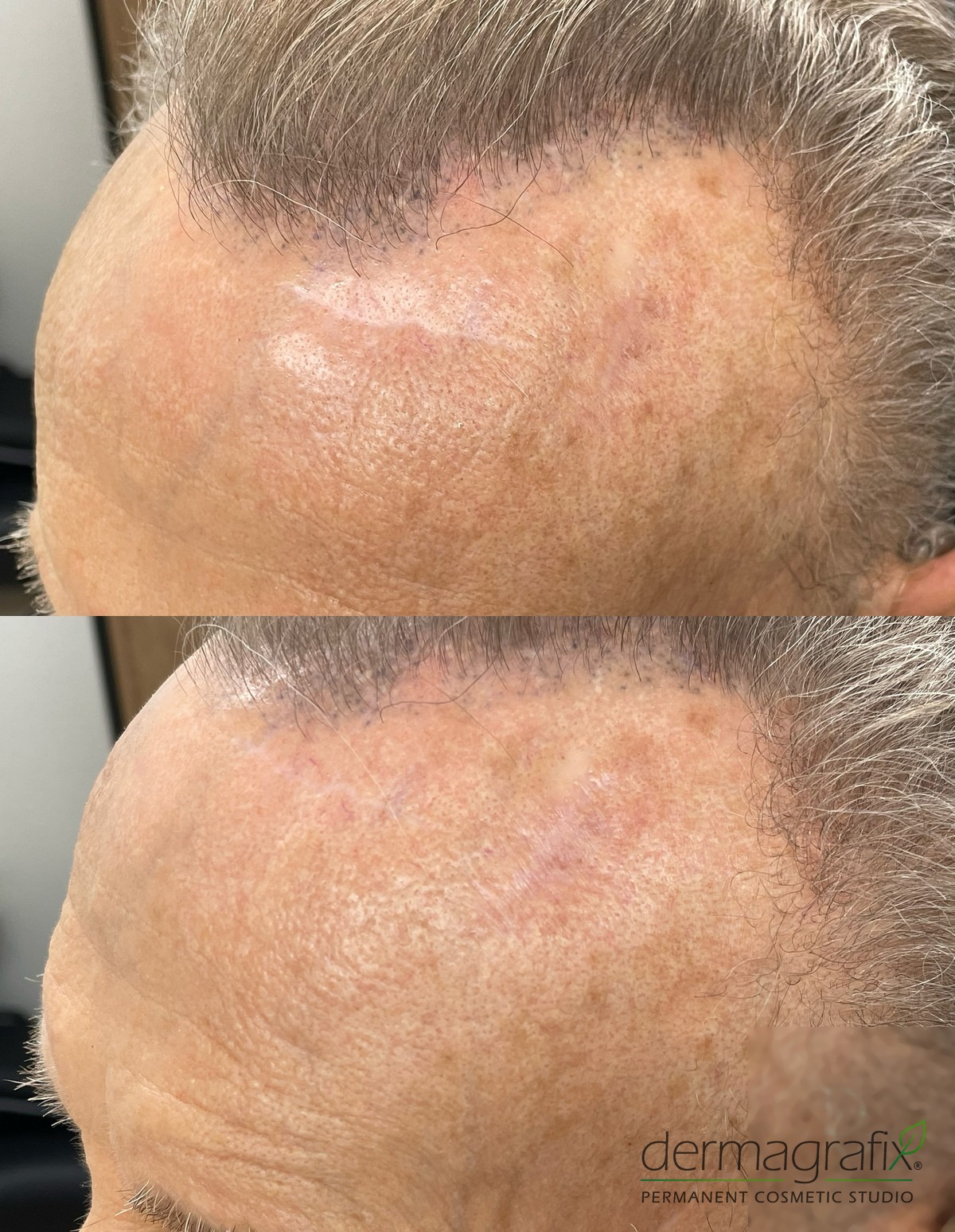
Skin is translucent. Light passes into it, scatters, and comes back — which is why real skin has depth and makeup does not. Everything about how we approach scar camouflage follows from that one fact, including why it is built in layers and why it takes more than a single appointment.
Translucent passes, never opaque coverage
We only place translucent passes of color. Several custom-blended shades may be layered over two or more sessions, each one adjusting warmth, depth, or coolness until the area both matches your tone and holds the transparency real skin has. The layers work together the way skin does — the eye reads through them rather than at them.
The alternative is solid, opaque pigment applied to cover in one go. It can look convincing in a photograph on day one, but it reads flat and pasty in person, like heavy makeup sitting on the surface. It also ages badly: your surrounding skin keeps changing with sun and time while an opaque block does not, so the mismatch grows instead of softening.
Scar tissue is its own material
The surface of a scar does not tell you what lies beneath it. The deeper, more tensile layers of tissue vary in density, thickness, and blood supply along the same scar, so color is accepted and held unevenly from one end to the other. There is no way to know exactly how a scar will behave until it has been worked once and allowed to heal — which is why each session is a response to what the previous one actually kept, rather than a step in a fixed sequence.
Some scars need groundwork, some do not
A scar with raised, indented, or tethered texture usually needs retexturing or ink-less needling before tattooing can begin, because texture casts shadow and shadow is what the eye notices. Other scars are already flat, soft, and stable, and can be tattooed straight away. Every scar is evaluated on its own and approached in its own way — that assessment is the real work of the consultation.
Why it doesn't look concealed at first
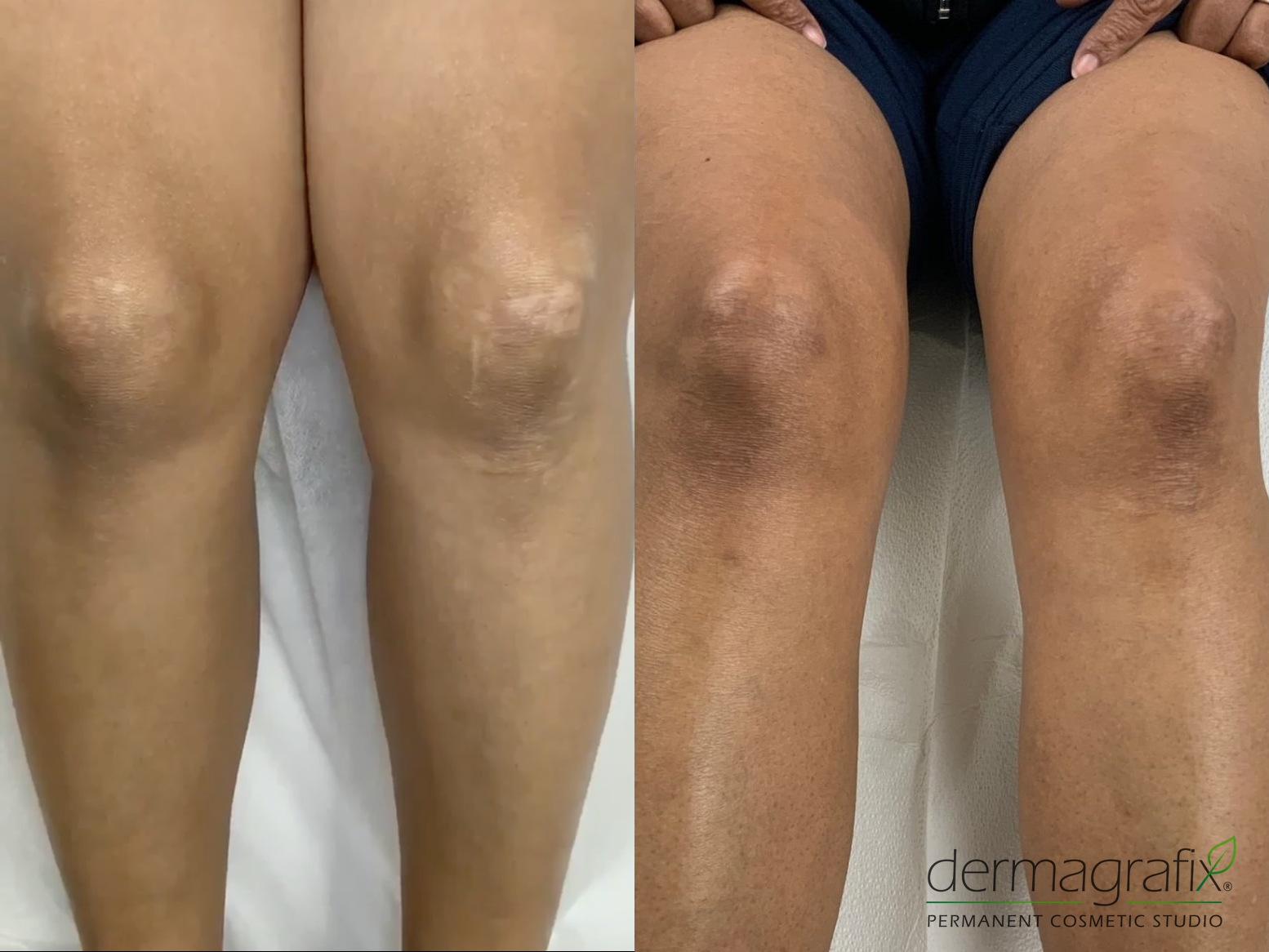
A tattoo is a fresh injury, so immediately afterward the area looks bruised and red. That injury color sits over the flesh-tone color you came for and hides it completely — nothing is wrong, you simply cannot see the work yet. As the injury heals and the redness diminishes, the placed color becomes visible for the first time.
Even once the surface has closed, at roughly three to ten days, the color is still remodeling inside the skin. Through that phase it can look uneven, patchy, or a shade off, and it continues to settle for weeks afterward. Deeper skin types may also see melanin changes around the treated area that take weeks or months to fade, and sometimes benefit from topical products that help calm melanin production while the skin recovers.
Spacing and a realistic timeline
Sessions are spaced to let all of that finish before the next layer is added. Compromised tissue needs weeks, not days, and retexturing rounds have their own spacing on top of that. A small, straightforward scar may be complete in a few sessions across several months; a large, complex, or heavily textured area can take a year or more. Realistic expectations and following the guidance of the specialist you work with are, honestly, as important to the outcome as the technique itself.
Read more about scar camouflage tattooing and inkless scar retexturing, or see healed results from real clients.
Pennsylvania
Our Doylestown studio welcomes clients from Bucks County, Montgomery County, Philadelphia and the greater Philadelphia area. See restorative tattooing and SMP near Philadelphia.
Florida
Our Stuart, FL studio welcomes clients from the Treasure Coast and Palm Beach coast, including Palm City, Jensen Beach, Port St. Lucie, Tradition, Hobe Sound, Jupiter, Tequesta and Palm Beach. See restorative tattooing and SMP on the Treasure Coast.