Scar camouflage
How to Choose a Scar Camouflage Tattoo Artist
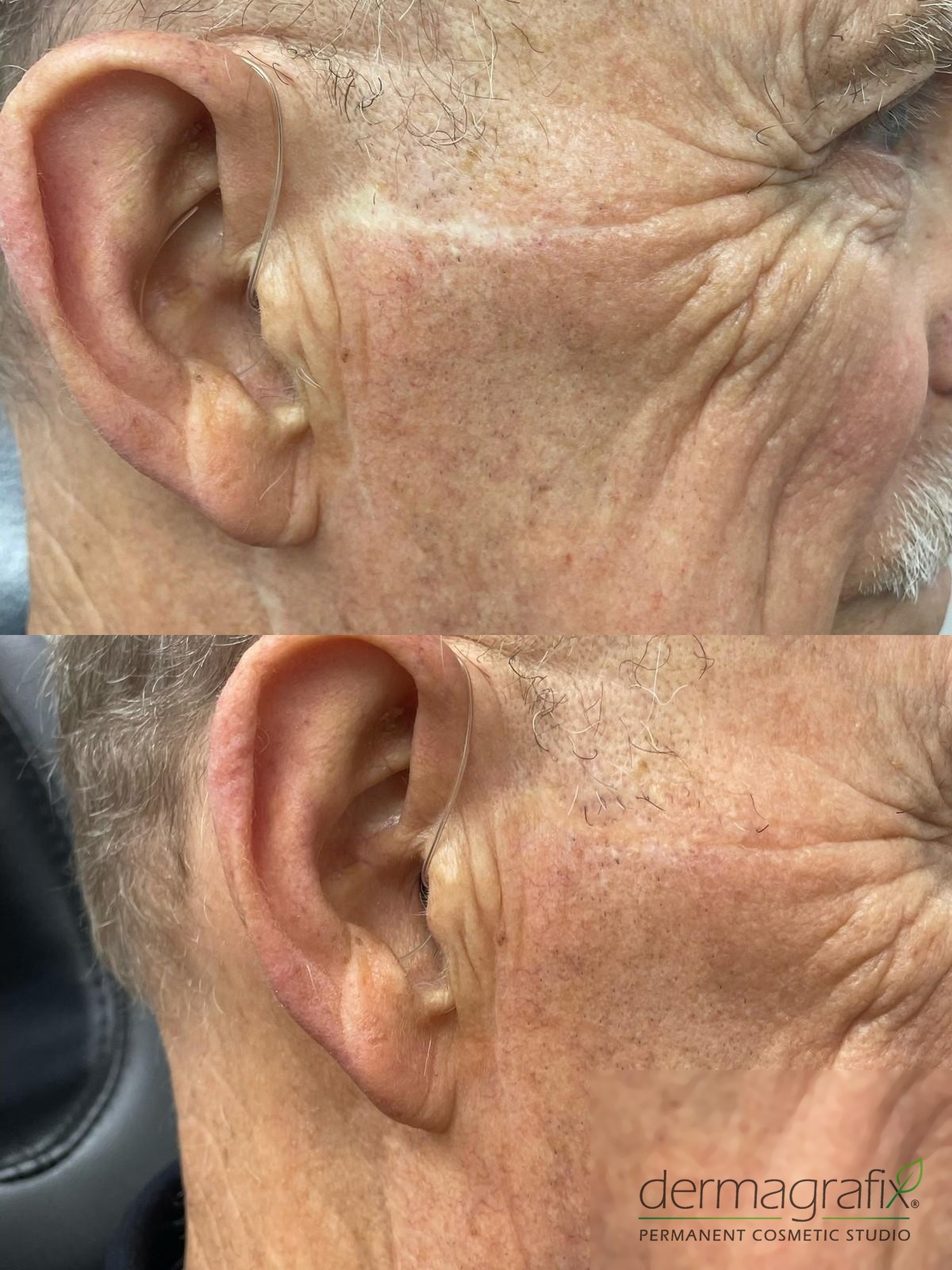
Scar camouflage is not a regulated speciality. Anyone with a tattoo licence can advertise it, and the work is unforgiving — pigment placed into scar tissue behaves differently from pigment placed into healthy skin, and a poor result is much harder to undo than it was to create. Choosing carefully matters more here than in almost any other kind of tattooing.
1. Ask for healed photos, not fresh ones
A photo taken at the end of a session shows pigment at its darkest, sitting high in the skin, with the surrounding tissue flushed. Everything looks matched. Four to six weeks later, some of that pigment is gone and the true colour shows. Ask for the six-week photo of the same scar, at the same angle, in the same light. An artist who has them will hand them over without hesitation.
2. Look for work on skin like yours
Colour matching is the whole job. An artist whose portfolio only shows one skin tone has not had to solve the problems your skin will present. This matters especially in melanin-rich skin, where undertone shifts and healing responses are different, and around areas of pigment loss, where the target colour itself may still be moving.
3. Check that texture comes before colour
A raised, indented, shiny or tight scar will still catch the light after it is colour-matched, because the eye reads texture before it reads tone. A specialist will often recommend inkless needling or scar relaxation first and pigment later, or sometimes no pigment at all. An artist who answers every scar with camouflage only knows one tool.
4. Expect a plan, not a single appointment
Camouflage is built in translucent layers, and each layer has to heal before the next goes in. If you are quoted one session for a mature surgical scar, that is a warning sign. Three or more is normal, and here is why.
5. Listen for what they refuse to do
The most useful thing a specialist can tell you is no. No to a scar that is still maturing. No to white or flesh-tone pigment over something dark. No to working over an unstable skin condition without your dermatologist's input. An artist who says yes to everything is selling appointments, not results.
Red flags
- Only fresh photos, or heavy filtering. Smoothed, brightened or cropped-tight images hide the edges, which is exactly where camouflage succeeds or fails.
- A firm price over the phone. Two scars that photograph the same can need completely different plans once the skin is stretched and examined in person.
- Guaranteed results. Nobody can promise how your skin will hold pigment. Ranges and honest expectations, yes; guarantees, no.
- No mention of a patch or spot test. On unusual tone, previous tattoo work or pigment-loss conditions, a test first is the careful path.
Questions worth writing down
- May I see healed photos of a scar similar to mine, on similar skin?
- Does this scar need texture work before any colour?
- How many sessions do you expect, and how far apart?
- What happens if the colour heals lighter or darker than we wanted?
- What would make you tell me not to do this?
Where we work
Dermagrafix has been doing this work since 2003, from two studios. If you are in the north, see scar camouflage in Bucks County and the Philadelphia area. In Florida, see the Treasure Coast and Palm Beach coast. Clients travel to both, and a first visit can be virtual.
Read more about scar camouflage tattooing and inkless skin retexturing, or see healed results from real clients.
Pennsylvania
Our Doylestown studio welcomes clients from Bucks County, Montgomery County, Philadelphia and the greater Philadelphia area. See restorative tattooing and SMP near Philadelphia.
Florida
Our Stuart, FL studio welcomes clients from the Treasure Coast and Palm Beach coast, including Palm City, Jensen Beach, Port St. Lucie, Tradition, Hobe Sound, Jupiter, Tequesta and Palm Beach. See restorative tattooing and SMP on the Treasure Coast.